

Foldable solar blankets and lightweight glass solar panels are designed for different power requirements. Both can be used in off-grid applications, but their installation methods, portability and operating conditions differ.
Solar blankets are generally suited to temporary setups where equipment needs to be moved or repositioned. Lightweight glass panels are intended for installations where the modules remain in place for extended periods. Selecting between them involves considering available space, mounting conditions, power requirements and how frequently the system will be relocated.
Foldable Solar Blankets for Portable Power
Foldable solar blankets offer a practical option for applications where portability and ease of setup are important. The 170W foldable SUNPOWER solar charger blanket, for example, can be folded for storage and transported between locations without requiring a permanent mounting structure.
The model has a published cell efficiency of 25%, allowing it to provide a rated output of 170W in a relatively compact format. Its flexible arrangement also makes it possible to adjust the blanket’s position throughout the day to improve exposure to sunlight.
This type of solar charger is suitable for outdoor activities, vehicle-based travel, field surveys and emergency power applications. Since the blanket can be packed away after use, it is particularly useful where a fixed solar installation is impractical.
Lightweight Glass Solar Panels for Fixed Installations
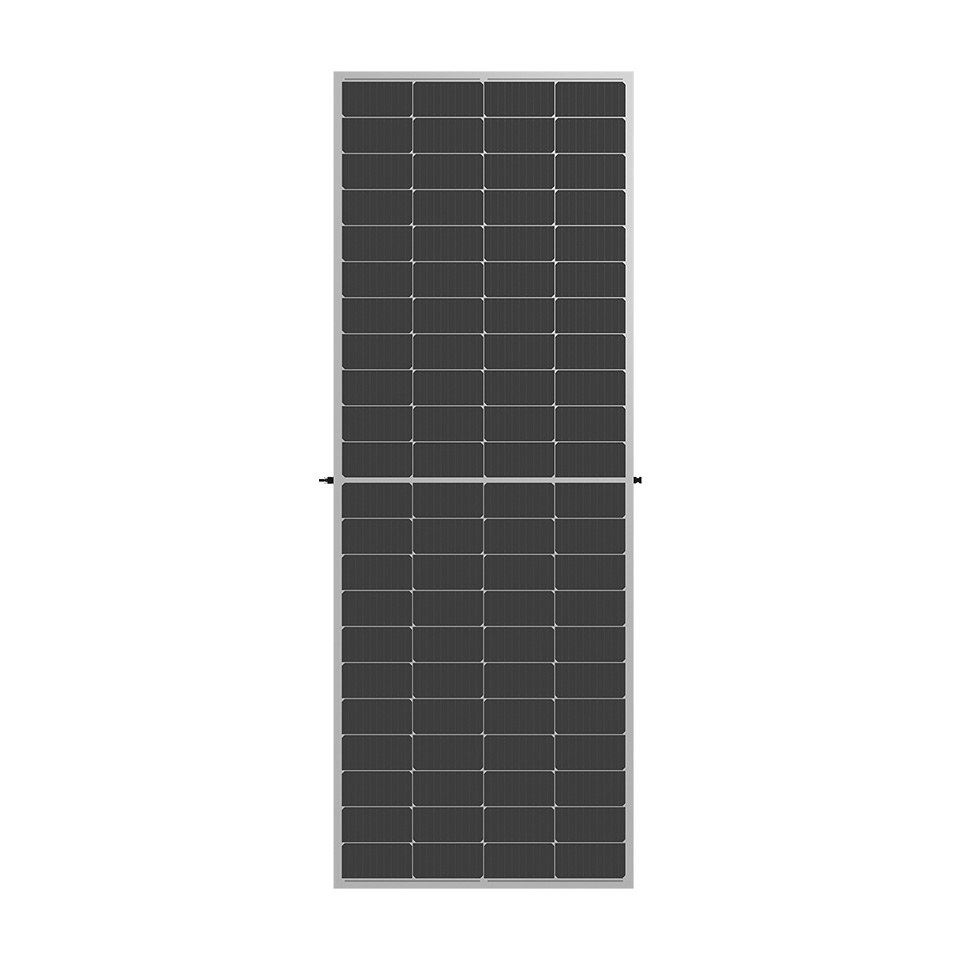
The 570W lightweight glass solar panel is designed for applications requiring a more permanent solar power installation.
The module measures 2173 × 1132 × 29 mm and weighs 16.8 kg, with a specified weight of 6.8 kg/m². These figures are important when assessing mounting requirements, particularly for rooftops and other structures where additional weight must be considered.
The panel incorporates 120 N-Type TOPCon half-cells, 1.6 mm heat-strengthened glass, an aluminum alloy frame and a white FPF backsheet. Its rated module efficiency is 23.17%, with a power density of approximately 232 W/m².
The electrical specifications include:
l Maximum power voltage (Vmp): 38.13V
l Open-circuit voltage (Voc): 44.55V
l Maximum power current (Imp): 14.95A
l Short-circuit current (Isc): 15.62A
These specifications provide a basis for evaluating the module’s compatibility with mounting structures, charge controllers and other system components.
Weight, Power Density and Installation Requirements
For rooftop applications, panel weight and power density are useful starting points when comparing different solar modules.
At 6.8 kg/m², the 570W lightweight glass panel offers a relatively low module weight for its rated output. Its power density of approximately 232 W/m² also helps project teams estimate the nominal installed capacity that can fit within a given roof area.
However, module weight alone is not sufficient to determine whether a roof is suitable. Mounting hardware, wind loads, structural conditions and other installation requirements must also be considered.
Electrical connections require similar attention during system planning. The panel is supplied with a 350 mm cable with a 4 mm² cross-section. Depending on the layout, additional cable lengths or connectors may be needed to complete the installation.
Reviewing these details during the design stage helps establish the required mounting and electrical components before installation begins.
Understanding Cell Efficiency and Module Efficiency
Efficiency figures require careful interpretation when comparing portable solar blankets with framed solar panels.
The 170W foldable SUNPOWER solar blanket has a published cell efficiency of 25%, while the 570W lightweight glass panel has a module efficiency of 23.17%.
Cell efficiency refers to the proportion of incident solar energy converted into electricity by the solar cell under specified test conditions. Module efficiency measures the performance of the complete panel, including the effects of cell spacing, electrical connections and other module components.
Since these measurements describe different levels of the solar product, they should not be used as a direct comparison of overall system performance.
For fixed installations, rated output, module dimensions and power density are useful comparison points. Portable systems may also need to be evaluated in terms of folded dimensions, total weight and ease of deployment.
Actual energy generation will depend on sunlight conditions, orientation, temperature and system configuration.
Selecting a Solar Panel for Different Applications
The choice between a foldable solar blanket and a lightweight glass panel depends largely on how the power system will be used.
Portable solar blankets are well suited to temporary installations, including camping, mobile workstations, field operations and emergency equipment. Their main advantage is the ability to transport, set up and reposition the charging surface as needed.
Lightweight glass panels are generally more appropriate for rooftop systems, stationary off-grid installations and other applications where the modules can remain securely mounted. Once installed, they provide a fixed solar generating surface without the need for regular manual repositioning.
NEWLIGHT offers products in both categories, including 60W and 100W portable solar chargers, 200W and 300W folding solar panels, and lightweight glass modules rated at 220W, 365W and 570W.
This range allows different panel formats to be considered for projects involving both portable and stationary power requirements.
Conclusion
Foldable solar blankets and lightweight glass solar panels serve different purposes within off-grid power systems. Portable blankets provide flexibility for temporary use, while glass modules are designed for installations requiring a fixed mounting arrangement.
A suitable choice depends on the intended application, available installation space, structural limitations and electrical requirements. Reviewing these factors alongside the manufacturer’s technical specifications provides a more reliable basis for selecting the appropriate solar panel format.